A late bedtime, short naps, repeated wakings. Before choosing an approach, talk with Nana in chat about what’s happening and what you’d like to change.
Your child’s stage
Age and birth timing help establish a suitable starting point.
Your everyday rhythm
Bedtime, naps, feeds and the recent nights you’ve recorded.
Your comfort with change
What matters to you, how you help your child settle, and what feels manageable.
What you’ve already tried
What helped, what felt difficult, and guidance your pediatrician has given you.
Together, these details give Nana a starting point. You review the approach and choose when to begin.
Different ways to get there.
Some families want to stay close. Others prefer brief check-ins or a gradual change in bedtime. Explore the approaches you can discuss with Nana.
For the earliest months
Little rhythms. Lots of reassurance.
Under six months adjusted age, Bimbi starts with Newborn Foundations: responsive care, a simple wind-down and getting familiar with your baby’s rhythms.
Comfort and feeding come first. This is support for early sleep, without formal sleep-training timers or a promise of uninterrupted nights.
Chair Method
Stay nearby. Make room for a little more independence.
What to expect +
You stay near your child as they settle, then gradually move farther away as the plan progresses. It gives you a way to be present while changing how much help you offer.
Being visible can be reassuring for some children and frustrating for others. Your check-ins help you discuss whether the approach still feels right.
Pick Up, Put Down
Offer hands-on comfort, then another chance to settle.
What to expect +
You pick your baby up to comfort them, then return them to their sleep space. The plan helps you understand the sequence and what to focus on that night.
Repeated picking up can become stimulating. If your baby grows more upset, pause and review the approach instead of pushing through a fixed number of rounds.
Timed Check-Ins
Brief visits. A predictable way to offer reassurance.
What to expect +
You return for short, calm check-ins at planned intervals. Your plan explains how those visits work so you can understand the approach before choosing it.
Some crying can happen. Check-ins never mean ignoring feeding, comfort or safety needs, and you can pause if the approach does not fit your family.
Bedtime Fading
Start with when sleep happens. Shift bedtime gradually.
What to expect +
The starting point is closer to when your child currently falls asleep. From there, the plan gradually moves bedtime toward an earlier time.
The focus is on settling at bedtime. It is not a promise to resolve every night waking, and changes should fit your child’s age and overall sleep needs.
Ferber
Reassurance visits, with gradually longer intervals.
What to expect +
Also called graduated extinction, this approach uses check-ins with intervals that lengthen according to the plan. You review what that means before deciding to start.
It can involve crying and will not suit every family. Your comfort, your child’s suitability and your decision to continue matter throughout.
Preschool Boundaries
A warm routine. Clear expectations for bigger kids.
What to expect +
For preschool-aged children, the focus shifts to a predictable routine, calm responses to bedtime requests and consistent boundaries. Positive acknowledgment helps make the routine familiar.
This is support for a different stage. Genuine fears and the need for comfort still deserve a response; the plan is not about punishment.
Available approaches depend on your child’s age and needs. These descriptions help you understand the options; Nana reviews suitability with you before a plan starts.
Know tonight’s step. Keep the bigger picture.
Your plan lives in Bimbi, alongside the nights you record. Here’s what it looks like when you’re working through it.
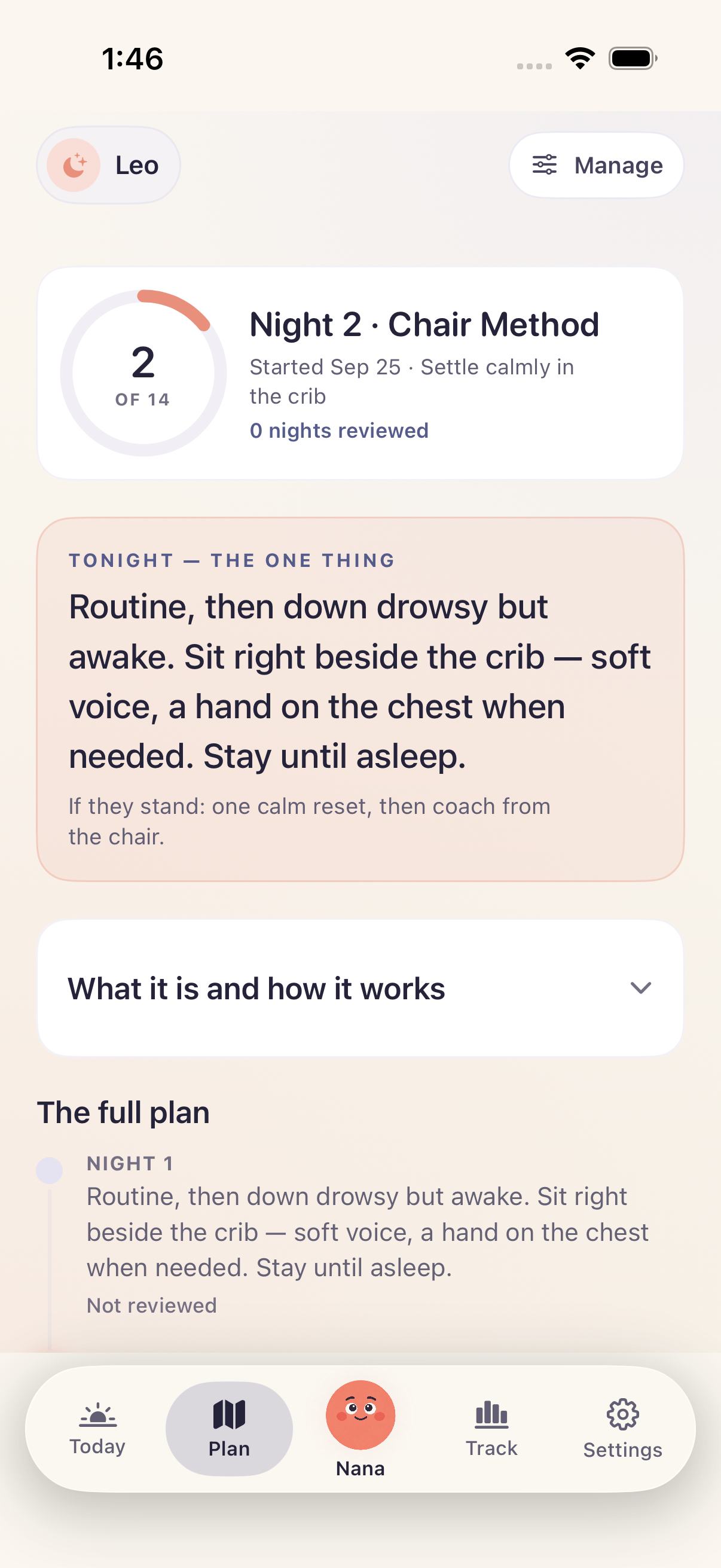
One focus for tonight.
A clear next step, a guide to your chosen method, and the full nightly sequence to look ahead.
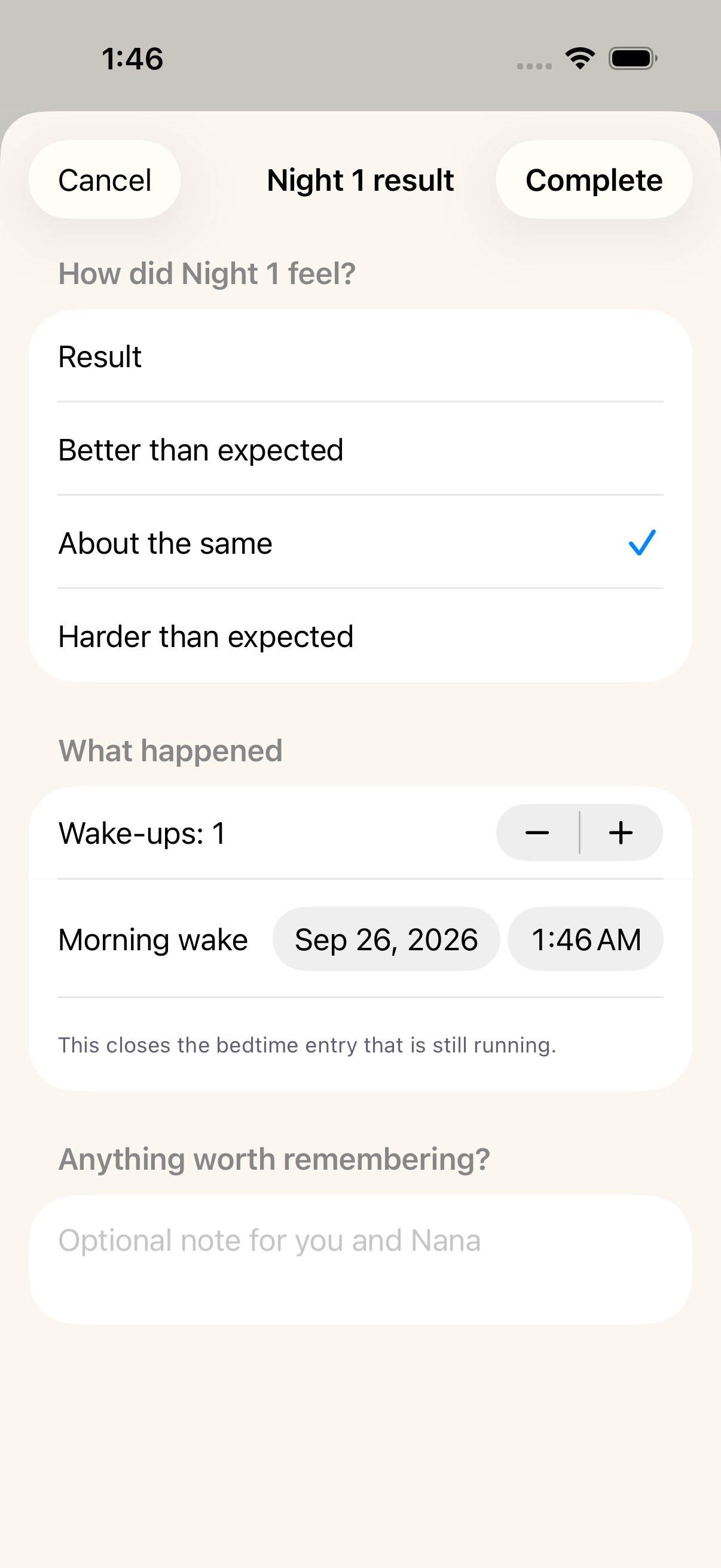
A place to say how it went.
Better, the same, or harder? Record wakings and add the details you want to bring to Nana.
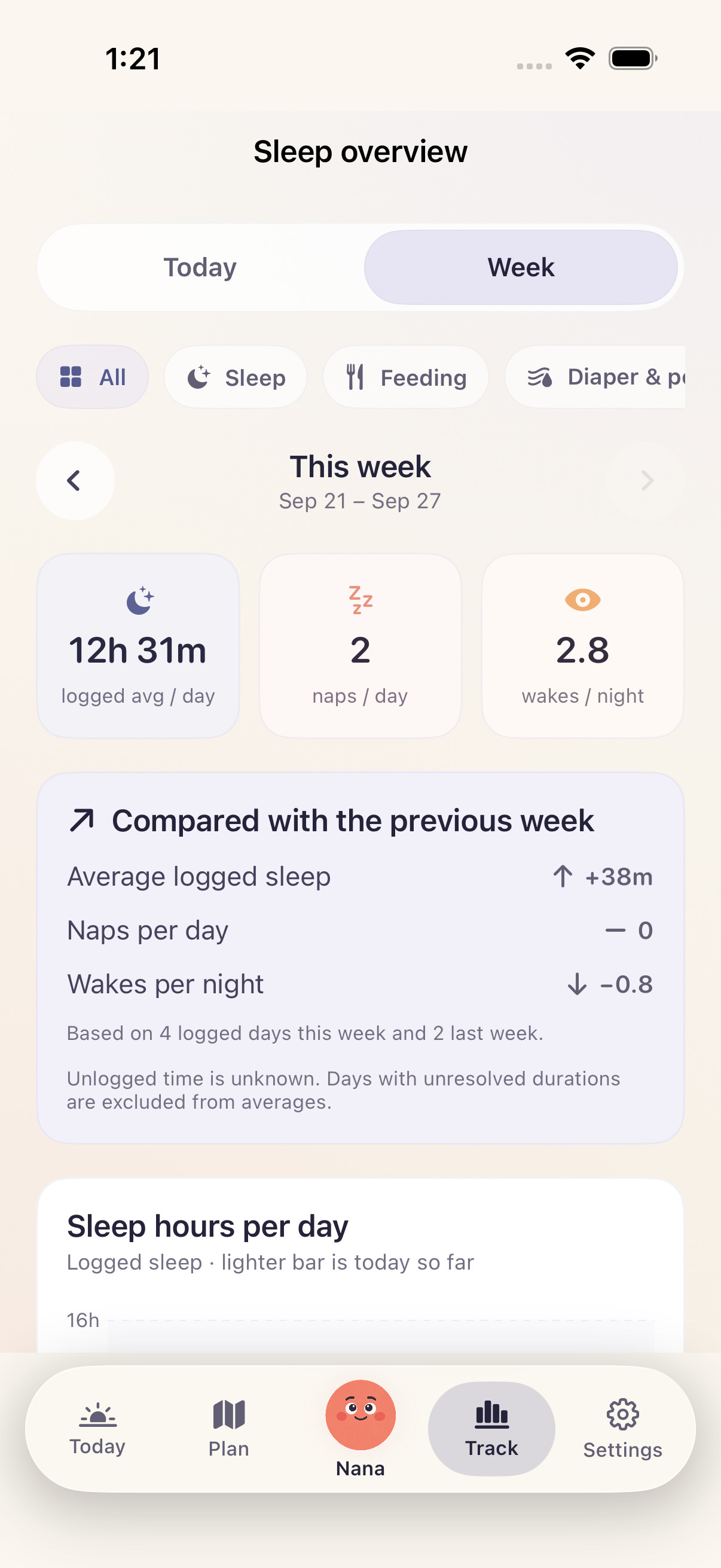
More than one night to go on.
Look back at recorded sleep, naps and wakings across the week before discussing your next step.
The plan is the beginning. Nana stays in the conversation.
Start with your story.
Share your routines and priorities in chat. Review the plan before you start.
Take it one night at a time.
Follow tonight’s focus and check in about what actually happened.
Talk through the next step.
Your current plan and recent check-in give Nana context to help you review what’s working.
Honest answers about sleep plans, your choices and Nana’s role.
What age are Bimbi sleep plans for?+
Bimbi’s sleep support covers babies through age six. Under six months adjusted age, the starting point is responsive sleep foundations, not formal sleep training. From six months, the available approaches depend on age, needs and suitability. Preschool plans focus on routines and boundaries. An age threshold alone does not mean a child is ready.
What if my baby was born early?+
Bimbi takes adjusted age into account when considering sleep-plan suitability. Share your baby’s birth timing and any relevant guidance from your pediatrician during setup. For questions about readiness, feeding or development, talk to your child’s healthcare professional.
Do I have to sleep train?+
No. You can use Bimbi to record sleep, understand your routines and talk with Nana without starting a formal plan. You review an approach and choose whether to begin. A plan should support your family’s priorities.
Will there be crying?+
Some crying can happen, but Bimbi will never encourage you to leave your baby in distress. Learning your baby’s different cries and cues is part of getting to know them, and it isn’t always easy. If your baby seems distressed—or you’re unsure—pause the plan, pick them up and comfort them. You never need to wait for a timer or Nana’s permission. Nana cannot reliably determine what a cry means; your response comes first.
How long will a plan take?+
There is no guaranteed number of nights or promised sleep outcome. A plan has a sequence of nightly steps, but your child’s response and your circumstances matter. The sample app screen shows one 14-night plan; that is an example of the format, not a deadline for your family.
Does a sleep plan mean stopping night feeds?+
No. A sleep plan is not a night-weaning plan. Decisions about feeding, growth or changing night feeds belong with your pediatrician or qualified healthcare professional. Tell Nana about their guidance so it can be taken into account.
How do I create a plan with Nana?+
In the current app, discuss your situation with Nana in chat. Share your child’s age, routines, priorities and what you have already tried. Review the available approach and plan before choosing to start. Voice is available for everyday conversations with Nana; plan setup and review currently happen in chat.
What happens if a night is harder?+
Record how the night felt, wakings and any notes. Those details and your current plan give the next conversation with Nana a starting point. You can pause, resume or discuss a change of approach. Your check-in does not automatically rewrite the plan.
Can I use sleep plans now? What do they cost?+
Bimbi for iPhone is currently in private testing. Full sleep plans require eligible membership, private-test access and suitability for your child. Public pricing and launch availability have not been announced. Leave your email for app updates; signing up does not grant immediate access.
Is Nana a sleep consultant or a medical professional?+
Nana is an AI parenting companion, not a human sleep consultant or medical professional. She does not provide medical advice, diagnosis or treatment and can make mistakes. Bring health, feeding, breathing or development concerns to your child’s healthcare professional.